Month: November 2007

  • How to Choose the Right Community Association Management Company

    gm-cartoon.png
    The Board of Directors should focus on the Wants & Needs of their Association and not the every day business and administration operation.

    If the Association has eighteen (18) or more units, then the Association should hire a professional property manager. This will eliminate unnecessary costs and headaches, which is associated with these types of tasks. By assigning the major day-to-day Association business, the Board of Directors would have time for what really matters to them. Directors would also have more time to prioritize projects and plan for the future.
     
    Top 5 reasons why it’s time to find a new management company:

    • Due to the possibility of a conflict of interest, Directors may replace a management company appointed by the developers.
    • An existing management company resigns.
    • After a clear chance of redemption, the management company just can’t pull it together.
    • Gross negligence.
    • Lastly, an Association either serves more than fifty (50) units or carries an annual budget excess of $100,000.

    After seeking a new management company through the yellow pages, newspaper, Internet via websites or reputation. Set up a date, time and place to meet for an interview. Have the same set of questions for all interviewing companies. Before the interview, have the management company supply a proposal/contract, job description and company references. Also, ask to meet with the associated manager and the manager’s assistant at or before the interview. Reviewing these documents before the interview will better help the preparation of relevant questions. Here is a list of possible questions:

    • What is the primary service of the management company?
    • How long has the company been in business?
    • Does the company have any long time acquaintances?
    • Does the company manage any associations comparable to yours?
    • Is the company participating in any continual education programs?
    • What are the procedures for handling complaints, violations and work orders forms? 
    • Is there any undefined job descriptions?
    • What are the companies after hour emergency procedures and/or policy?

    After the interviews, your Association should have three (3) quality proposals. Have the Association Attorney review the management bids. Arrange for the management company to adjust any contact revisions made by the Association Attorney. Before electing a new management company, make sure everybody understands the amounts allotted for office expenses and any other outside costs. If the management company has their own landscape, pool or other services, then each one of these services must be itemized. This is the only way the Association will understand all actual costs.

    Usually management contracts allow for a thirty (30) day clause for “just cause” and a sixty (60) day cancellation for any reason. Which ever management company the Association decided to go with, you can ensure the Board had made a fair, prudent and responsible decision and a new approach for the Board to meet its goals. For supporting documents, see Florida Statute below regarding definitions: (more…)

  • Condominium Verses Homeowner Associations


    For the State of Florida there are two (2) mandatory meetings required for both Condominium and Homeowner Associations. The Annual Meeting and the Annual Budget Meeting. Once a year the Members shall hold an Annual Member’ Meeting. And once a year the Board of Directors holds a Special Budget, Annual Budget or Budget Meeting.
    Prior to the Budget Meeting, the Board of Directors must provide for a proposed budget to all members. The mailing procedures are outlined in the applicable Bylaws. For Homeowner Association, if the reserves were established after developer turnover, then the reserve funding must continue as schedule.

    All Condominium Associations must fully fund  roof replacement, building paint, pavement resurfacing with an useful life of three (3) to thirty (30) years and anything which cost more than $10,000 like swimming pools, elevators and fencing etc…

    Most Homeowner Associations require reserve funding for replacement cost. The reserves may be adjusted from year to year as our economy grows. Some Associations pay for a “reserve studies” performed by specialists. A paid professional doesn’t alleviate Board’s liability. It’s a wonder why a professional with experience, references and good credentials performing the study offers no guarantee. Ultimately the Board of Director’s are responsible for adequate reserves. Without a licensed engineer, the reserve study wouldn’t be very accurate anyway. Since property managers are out in the field everyday, they are well aware of the dollar amounts of these replacement costs. It’s a rare day when a property manager is not in the middle of a roof, building paint or asphalt resurface project.

    Now that the reserves are adjusted and the anticipated income and expense is added, it’s time to send out the proposed budget. With the escalating insurance premiums, the homeowners may not like the increase in quarterly dues. We already know the how to protest the excessive budget’s for Condominium Associations (Condominium has Regulations, Where Homeowner Associations do not. Regarding Notice of Meeting to Consider Excessive Budget).


    For Homeowners Associations, here are your only recourse:

    • 20% of the of the voting members would have to petition to hold another meeting requesting to be able to debate the proposed budget. 
    • If the 20% had been achieved, then the Board would have sixty (60) days to hold a Special Board Meeting.
    • A fourteen (14) day notice is required.
    • The appropriate line item to the agenda would be added.
    • Each member would have a minium of three (3) minutes to protest the matter.
    • The Board could require all members to fill out a request form and/or sign in sheet before being elgible to speak.

    Other than addressing the petitioned item at the meeting, the Board has no obligation to take any action. See Florida Statute (d) below: (more…)

  • Condominium has Regulations, Where Homeowner Associations do not. Regarding Notice of Meeting to Consider Excessive Budget

    cash-cartoon.png

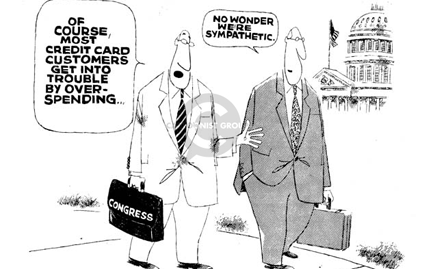
    Excessive budgets hurts everybody, including myself. The biggest expense for Community Associations is by far insurance premiums. The State of Florida (Charlie Chris) really should allow for some windstorm and flood insurance relief for us Florida Floridians. 

    If a condominium owner wishes to dispute a proposed budget, here are some guidelines. Note; The Florida Statutes do not provide for substitute budget procedures regarding Homeowner Associations.

    If a budget adopted by the Board of Directors requires assessment against the Unit Owners for any calendar year exceeding 115% of the assessment for the preceding year (less any lawfully excluded items), the Board shall consider a substitute budget. (A) If receives written application of 10% of the voting interests to the Board. (B) If the Board receives, within 21 days after the adoption of the proposed annual budget,

    Here are the required steps:

    • The implicated unit owners should first furnish a prepared substitute budget for consideration.
    • After adoption of the annual budget, the special meeting shall be conducted within 60 days.
    • A required 14 day special meeting notice shall be mailed to all recorded owners and posted in a conspicuous place on the condominium property 48 hours prior of meeting.
    • An executed affidavit is required to validate mailing and for record keeping.
    • If the applicable Bylaw’s does not require a greater percentage, then a majority member’s vote would adopt a substitute budget at the special meeting.

    If there is no adoption of substitute budget, the annual budget previously adopted by the Board shall take effect as scheduled.

    See Florida Statute below:
    (e)  Budget meeting.–
    1.  Any meeting at which a proposed annual budget of an association will be considered by the board or unit owners shall be open to all unit owners. At least 14 days prior to such a meeting, the board shall hand deliver to each unit owner, mail to each unit owner at the address last furnished to the association by the unit owner, or electronically transmit to the location furnished by the unit owner for that purpose a notice of such meeting and a copy of the proposed annual budget. An officer or manager of the association, or other person providing notice of such meeting, shall execute an affidavit evidencing compliance with such notice requirement, and such affidavit shall be filed among the official records of the association. (more…)

  • Gulfshore Property Mgmt. Condominium & Homeowner Association Management


    Our Neighbor’s from down stairs had the Shrubs Removed and Built a Patio.

    The other day while inspecting a two story condominium buildings, I noticed something out of place. Some of the front porches had been remodeled. The former landscape, yellow flowers and sod were missing and had recently been replaced by red pavers.

    It was later learned that some members received Board approval to have their porch transformed into a patio area. The newly remodeled patios consist of picnic tables, chairs, table-umbrellas and the like.

    Most condominium documents do not allow for this type of personal use. As we all know, the Association owns common property.

    Since some of the Board members had approved such patio installations, the Association must now “cease and desist”.

    Now that the damage is done, here are a couple of ways the problem could be resolved. (A) The Directors could elect to remove the pavers and re-landscape at the expense of the Association. (B) The pavers could simply remain in place. But if a disgruntled unit owner wishes to file a complaint, the Association would be forced to bring the patio areas back to the original condition.

    If not provided for in the applicable documents, a seventy five percent (75%) unit owner (members) vote and a special meeting would be required to allow for the patio installation, which would be considered a “material change”. Please see Florida Statute below:

    718.113  Maintenance; limitation upon improvement;
    (1)  Maintenance of the common elements is the responsibility of the association. The declaration may provide that certain limited common elements shall be maintained by those entitled to use the limited common elements or that the association shall provide the maintenance, either as a common expense or with the cost shared only by those entitled to use the limited common elements. If the maintenance is to be by the association at the expense of only those entitled to use the limited common elements, the declaration shall describe in detail the method of apportioning such costs among those entitled to use the limited common elements, and the association may use the provisions of s. 718.116 to enforce payment of the shares of such costs by the unit owners entitled to use the limited common elements. (more…)

  • Can a Unit Owner Assign His or Her Voting Rights?


    Unless otherwise provided in the Bylaws, the assignee would have the right to attend meetings by submission of application to the Association for approval. Upon Board’s approval, the assignee would gain the right to attend Association meetings. This doesn’t mean an assignee can vote for the unit owner. The Florida Statute specifically states, “No unit owner shall permit any other person to vote his or her ballot, and any such ballots improperly cast shall be deemed invalid, provided any unit owner who violates this provision may be fined by the association in accordance with s. 718.303.”

    Some documents allow for a “Voting Member” the right to vote. If the owner of a unit is not a natural person or is a trustee, the unit’s primary occupant shall cast the vote of that unit, which would be the “Voting Member”. For validation and record keeping, the Voting Member would have to seek Board approval initiated by an application.

    The Florida Statute recognizes unit owners as a holder of a fee simple interest in a unit and does not specify assignments, the description of “unit owner” reads:
    (28) “Unit owner” or “owner of a unit” means a record owner of legal title to a condominium parcel.
    If a unit on record titled by a corporation, partnership or entity representative, an authorized person may vote on behalf of the unit with a “Voting Certificate” supplied by the selling upon closing.
    See Florida Statutes , 718.112, Bylaws below:

    718.112  Bylaws.

    (more…)