Category: Important Posts

  • Condominium has Regulations, Where Homeowner Associations do not. Regarding Notice of Meeting to Consider Excessive Budget

    cash-cartoon.png

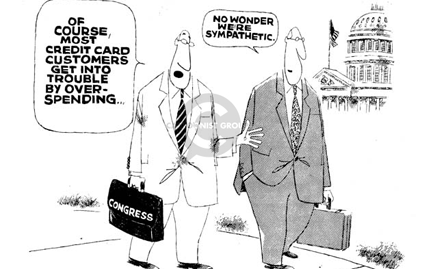
    Excessive budgets hurts everybody, including myself. The biggest expense for Community Associations is by far insurance premiums. The State of Florida (Charlie Chris) really should allow for some windstorm and flood insurance relief for us Florida Floridians. 

    If a condominium owner wishes to dispute a proposed budget, here are some guidelines. Note; The Florida Statutes do not provide for substitute budget procedures regarding Homeowner Associations.

    If a budget adopted by the Board of Directors requires assessment against the Unit Owners for any calendar year exceeding 115% of the assessment for the preceding year (less any lawfully excluded items), the Board shall consider a substitute budget. (A) If receives written application of 10% of the voting interests to the Board. (B) If the Board receives, within 21 days after the adoption of the proposed annual budget,

    Here are the required steps:

    • The implicated unit owners should first furnish a prepared substitute budget for consideration.
    • After adoption of the annual budget, the special meeting shall be conducted within 60 days.
    • A required 14 day special meeting notice shall be mailed to all recorded owners and posted in a conspicuous place on the condominium property 48 hours prior of meeting.
    • An executed affidavit is required to validate mailing and for record keeping.
    • If the applicable Bylaw’s does not require a greater percentage, then a majority member’s vote would adopt a substitute budget at the special meeting.

    If there is no adoption of substitute budget, the annual budget previously adopted by the Board shall take effect as scheduled.
    See Florida Statute below:
    (e)  Budget meeting.–
    1.  Any meeting at which a proposed annual budget of an association will be considered by the board or unit owners shall be open to all unit owners. At least 14 days prior to such a meeting, the board shall hand deliver to each unit owner, mail to each unit owner at the address last furnished to the association by the unit owner, or electronically transmit to the location furnished by the unit owner for that purpose a notice of such meeting and a copy of the proposed annual budget. An officer or manager of the association, or other person providing notice of such meeting, shall execute an affidavit evidencing compliance with such notice requirement, and such affidavit shall be filed among the official records of the association. (more…)

  • Gulfshore Property Mgmt. Condominium & Homeowner Association Management


    Our Neighbor’s from down stairs had the Shrubs Removed and Built a Patio.

    The other day while inspecting a two story condominium buildings, I noticed something out of place. Some of the front porches had been remodeled. The former landscape, yellow flowers and sod were missing and had recently been replaced by red pavers.

    It was later learned that some members received Board approval to have their porch transformed into a patio area. The newly remodeled patios consist of picnic tables, chairs, table-umbrellas and the like.

    Most condominium documents do not allow for this type of personal use. As we all know, the Association owns common property.

    Since some of the Board members had approved such patio installations, the Association must now “cease and desist”.

    Now that the damage is done, here are a couple of ways the problem could be resolved. (A) The Directors could elect to remove the pavers and re-landscape at the expense of the Association. (B) The pavers could simply remain in place. But if a disgruntled unit owner wishes to file a complaint, the Association would be forced to bring the patio areas back to the original condition.

    If not provided for in the applicable documents, a seventy five percent (75%) unit owner (members) vote and a special meeting would be required to allow for the patio installation, which would be considered a “material change”. Please see Florida Statute below:

    718.113  Maintenance; limitation upon improvement;
    (1)  Maintenance of the common elements is the responsibility of the association. The declaration may provide that certain limited common elements shall be maintained by those entitled to use the limited common elements or that the association shall provide the maintenance, either as a common expense or with the cost shared only by those entitled to use the limited common elements. If the maintenance is to be by the association at the expense of only those entitled to use the limited common elements, the declaration shall describe in detail the method of apportioning such costs among those entitled to use the limited common elements, and the association may use the provisions of s. 718.116 to enforce payment of the shares of such costs by the unit owners entitled to use the limited common elements. (more…)

  • Can a Unit Owner Assign His or Her Voting Rights?


    Unless otherwise provided in the Bylaws, the assignee would have the right to attend meetings by submission of application to the Association for approval. Upon Board’s approval, the assignee would gain the right to attend Association meetings. This doesn’t mean an assignee can vote for the unit owner. The Florida Statute specifically states, “No unit owner shall permit any other person to vote his or her ballot, and any such ballots improperly cast shall be deemed invalid, provided any unit owner who violates this provision may be fined by the association in accordance with s. 718.303.”

    Some documents allow for a “Voting Member” the right to vote. If the owner of a unit is not a natural person or is a trustee, the unit’s primary occupant shall cast the vote of that unit, which would be the “Voting Member”. For validation and record keeping, the Voting Member would have to seek Board approval initiated by an application.

    The Florida Statute recognizes unit owners as a holder of a fee simple interest in a unit and does not specify assignments, the description of “unit owner” reads:
    (28) “Unit owner” or “owner of a unit” means a record owner of legal title to a condominium parcel.
    If a unit on record titled by a corporation, partnership or entity representative, an authorized person may vote on behalf of the unit with a “Voting Certificate” supplied by the selling upon closing.
    See Florida Statutes , 718.112, Bylaws below:

    718.112  Bylaws.

    (more…)

  • The Florida Regulatory Council of Community Association Managers Changed the Florida Statutes Again.

    govenor, cartoon

    The Regulatory Council of Community Association Managers is created within the department and consists of seven members appointed by the Governor (Charlie Crist) and confirmed by the Senate.
    Five members of the council are licensed community association managers, one is a community association manager employed by a timeshare managing entity as described in ss.468.438 and 721.13, who have held an active license for 5 years. The remaining two council members shall be residents of the State of Florida and must not be or ever have been connected with the business of community association management.
    The Governor Charlie Crist will appoint members for terms of 4 years. Members will serve until their successors are appointed. Members’ service on the council will begin upon appointment and continue until their successors are appointed.

    Here are some notable 2007 changes made to the Florida Statute.

    718.106 Condominium parcels; appurtenances; possession and enjoyment —
    (5) A local government may not prohibit condominium unit owners or an association from permitting guests, licensees, or invitees access to a public beach adjacent to or adjoining the condominium property. (Maybe in the passed, local government would prohibit gate use or pathways leading to the beach?)

    local government, cartoon

    718.301 Transfer of association control; claims of defect by association —
    (6) Prior to the developer relinquishing control of the association pursuant to subsection (4), actions taken by members of the board of administration designated by the developer are considered actions taken by the developer, and the developer is responsible to the association and its members for all such actions. (Too many times the developer’s will appoint residents and not regulate their actions. It only make sense that the developer’s stay in full  control until turnover.)

    (7) In any claim against a developer by an association alleging a defect in design, structural elements, construction, or any mechanical, electrical, fire protection, plumbing, or other element that requires a licensed professional for design or installation under chapter 455, chapter 471, chapter 481, chapter 489, or chapter 633, such defect must be examined and certified by an appropriate Florida licensed engineer, design professional, contractor, or otherwise licensed Florida individual or entity. (It’s pretty obvious why this law is necessary.)

  • Developers are in Business too Make Money

    sales 2Sometimes developers cut off initial reserves to lower quarterly maintenance fees.

    One way to lower quarterly maintenance is to cut out reserves from the annual budget. Developers will use this strategy to sell homes. Advertisers use low quarterly maintenance as a selling feature. If it happens that a savvy prospective buyer inquires about budget reserves, the seller would simply say the reserves are not necessary until years later and wouldn’t amount to much.

    Although not a serious problem for developing Associations, most likely the reserves would eventually be added to the annual budget. If the reserves are not added then the capital expenditures and deferred maintenance would inevitably result in a special assessment.

    If the budget of the Association does not provide for reserves, then the annual reporting financial statement should read in a conspicuous space:

    THE BUDGET OF THE ASSOCIATION DOES NOT PROVIDE FOR RESERVE ACCOUNTS FOR CAPITAL EXPENDITURES AND DEFERRED MAINTENANCE THAT MAY RESULT IN SPECIAL ASSESSMENTS. OWNERS MAY ELECT TO PROVIDE FOR RESERVE ACCOUNTS PURSUANT TO THE PROVISIONS OF SECTION 720.303(6), FLORIDA STATUTES, UPON THE APPROVAL OF NOT LESS THAN A MAJORITY OF THE TOTAL VOTING INTERESTS OF THE ASSOCIATION.

    Unless stated in the applicable documents, the annual budget reserves can only be added by a majority vote of all qualify members. Voting can be executed by a “written consent” or by a members meeting and/or via proxies. See Florida Statute regarding reserve budget:

    sales cartoon

    (6)  BUDGETS.–
    (more…)

  • Fining Procedures for Homeowners Associations


    If your Homeowner Documents do not describe the fining procedures, then see Florida Statute below:

    If  the applicable  Documents do not detail the fining procedures, here are some basic guidelines.

    Bascially, a fourteen day (14) notice is require. A hearing by a committee will determine if the fine should  be imposed. The committee members are residents and not employees or Board of Directors. For each violation, a $100 per day up to $1,000 can be levied and is enforceable through small claims court.

    (more…)

  • Changes for Homeowner’s Association


    Starting July 1, 2007 a new legislation was signed by Governor Charlie Chris to prolong the assessment collection procedures. Apparently homeowner’s need more time to pay their assessments. Usually it could take about nine months to foreclose a property. Now foreclosures will take all of the nine months. Basically the Senate Bill calls for a 45 day notice in-lieu of the 30 day past due notice before a lien can be filed on a property.


    In order to verify mailing dates, management companies should promptly send delinquent notices both certified and first class mail. This could take the place of an Attorney’s letter and would save the Association Attorney’s costs.


    One last piece of the puzzle, the legislation also calls for a 60 day “qualifying offer”. Now a homeowner can make a deal (qualifying offer) with the Association to pay off the amounts secured by the lien up to a minimum of 60 days of pending costs (assessments, attorney’s fees, late fees and accruing interest).